How to Care for Your Gold & Diamond Jewellery
Fine jewellery is made to be treasured. Whether it is a delicate gold necklace, an everyday ring, a diamond bracelet or a special pair of earrings, jewellery often carries more than monetary value—it can hold memories, milestones and personal meaning.
With the right care and a few simple habits, your favourite jewellery pieces can continue to look beautiful for years to come.
Gold and diamonds are both durable materials, but that does not mean they are completely resistant to scratches, impact, chemicals or everyday wear. Regular cleaning, careful storage and occasional professional inspection can help protect your jewellery and maintain its appearance.
If you want your jewellery collection to remain beautiful for as long as possible, here are some essential jewellery care tips to follow.
How to Care for Your Gold & Diamond Jewellery
1. Keep Jewellery Away From Chemicals
One of the simplest ways to protect your gold and diamond jewellery is to minimise its exposure to chemicals.
Perfume, hairspray, cosmetics, lotions and household cleaning products can leave residue on jewellery or affect certain finishes and materials. Some chemicals can also be particularly unsuitable for delicate gemstones or jewellery settings.
As a simple daily habit, apply perfume, moisturiser and other beauty products before putting on your jewellery. Allow these products to dry before wearing your rings, necklaces, earrings or bracelets.
When cleaning your home, remove your jewellery whenever possible. Household cleaning products can be harsh, and repeated exposure may affect the appearance of jewellery over time.
The same principle applies when using other chemical products. If you’re unsure whether a particular substance is suitable for your jewellery, it is safer to remove the piece before exposure.
A simple rule to remember
Beauty products first, jewellery last.
This small change in your routine can help reduce unnecessary contact with chemicals and residue.
2. Clean Your Jewellery Gently
Regular cleaning can help remove everyday oils, dust and residue that accumulate through normal wear.
Gold jewellery can gradually lose some of its shine when exposed to skin oils, cosmetics and environmental residue. Diamonds can also attract oils, which may make them appear less bright.
Gentle cleaning can help restore the appearance of many jewellery pieces.
For suitable gold and diamond jewellery, a soft jewellery cloth and an appropriate mild cleaning method may be useful. However, the correct cleaning method depends on the materials and construction of the piece.
Avoid harsh chemicals, abrasive materials and aggressive scrubbing. Rough cleaning methods can potentially scratch surfaces or damage delicate settings.
If you’re uncertain about how to clean a particular piece, check the care guidance provided by the jeweller or seek professional advice.
How often should you clean gold and diamond jewellery?
There is no universal schedule because it depends on how frequently you wear each piece.
Jewellery worn every day may require more frequent gentle cleaning than pieces reserved for special occasions.
Rather than focusing only on a fixed schedule, pay attention to how the jewellery looks. If a diamond appears less bright or a gold piece has lost some of its shine, it may be time for a careful clean.
For valuable, intricate or delicate jewellery, professional cleaning can be a safer option.
3. Store Each Jewellery Piece Carefully
Proper storage is one of the easiest ways to protect your jewellery between wears.
When different jewellery pieces are stored together, they can scratch against one another or become tangled. Chains are particularly prone to tangling when placed loosely with other jewellery.
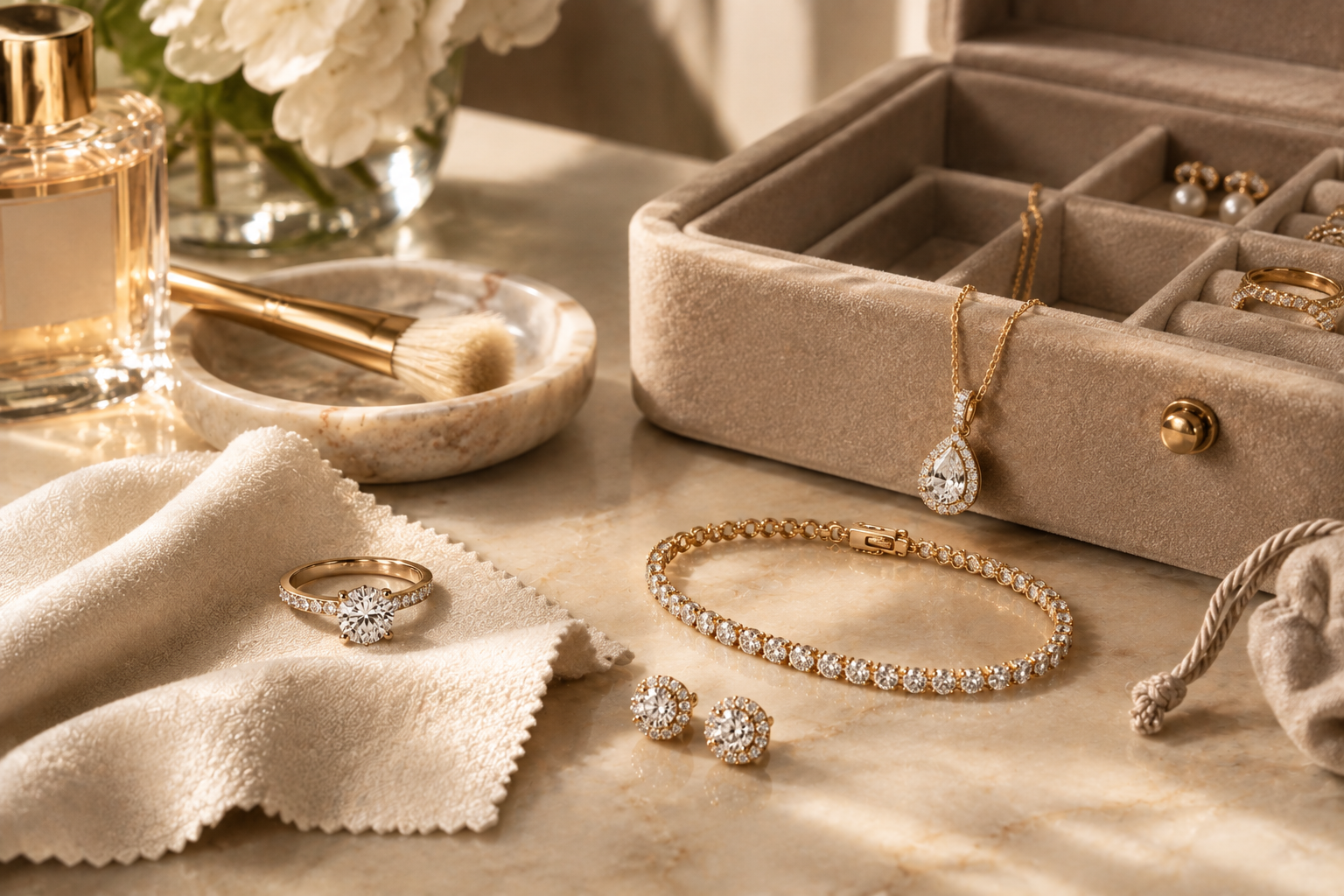
Whenever possible, keep rings, necklaces, earrings and bracelets in separate compartments.
A soft-lined jewellery box can help protect surfaces from unnecessary scratches while keeping your collection organised.
For necklaces and chains, fasten the clasp before storing them. This can help reduce tangling and make the necklace easier to wear next time.
If you don’t have a jewellery box with separate sections, individual soft pouches can also be useful.
Keep jewellery away from moisture
A dry storage environment is generally preferable for fine jewellery. Avoid leaving jewellery in areas where it is regularly exposed to moisture or humidity.
After wearing a piece, make sure it is dry before placing it into storage.
Taking a few extra seconds to store jewellery properly can make a significant difference over time.
4. Remove Jewellery During Certain Activities
Although gold and diamonds are durable, everyday activities can expose jewellery to unnecessary impact, chemicals and wear.
Consider removing your jewellery before:
- Swimming
- Exercising
- Gardening
- Cleaning
- Showering
- Sleeping
- Working with harsh chemicals
- Performing activities that may involve impact or friction
Swimming deserves particular attention because pools and other water environments may expose jewellery to chemicals.
Exercise can also create unnecessary wear through repeated movement, sweat and contact with equipment.
Gardening and household work can expose rings and bracelets to dirt, chemicals and physical impact.
Removing jewellery before these activities is a simple preventative measure.
What about sleeping in jewellery?
It can be tempting to leave your favourite ring or necklace on overnight, particularly if you wear it every day. However, repeated friction against bedding or accidental pressure can contribute to unnecessary wear.
For delicate or intricate jewellery, removing it before bed can be a sensible habit.
5. Take Extra Care With Diamond Jewellery
Diamonds are known for their exceptional hardness, but diamond jewellery still requires care.
The diamond itself may be highly resistant to scratching, but the setting that holds it in place can be more vulnerable to everyday wear.
A diamond ring, for example, can experience regular contact with surfaces throughout the day. Over time, this may affect the setting.
When handling diamond jewellery, pay attention to the condition of the setting as well as the gemstone itself.
If your diamond jewellery appears unusual or the stone seems to move, stop wearing the piece and have it inspected by a qualified jewellery professional.
6. Check Your Diamond Settings Regularly
One of the most important jewellery care habits is occasional inspection.
Every so often, take a moment to look closely at your diamond jewellery. Check whether the gemstone appears secure and whether the setting looks intact.
You may also gently examine the piece for obvious changes, but avoid deliberately applying pressure to the stone or setting.
Signs that a piece may require professional attention include:
- A gemstone appears loose
- A setting looks damaged
- A clasp no longer closes securely
- A prong appears bent or worn
- The jewellery has developed visible damage
- A stone looks different from when you purchased it
If something doesn’t feel secure, stop wearing the piece until it has been professionally inspected.
Preventative inspection can be particularly valuable for jewellery that is worn frequently.
7. Protect Gold Jewellery From Unnecessary Scratches
Gold jewellery is beautiful and versatile, but gold can develop scratches through everyday use.
Rings and bracelets may be especially exposed because they frequently come into contact with surfaces and other objects.
Avoid storing gold jewellery loosely alongside other pieces. A ring rubbing against another ring or a bracelet can gradually develop surface marks.
Separate storage and careful handling can help minimise unnecessary scratching.
If your gold jewellery develops signs of wear over time, professional cleaning and polishing may help restore its appearance, depending on the piece and its finish.
8. Be Careful With Delicate Jewellery
Not all jewellery is designed for the same type of wear.
Delicate chains, intricate settings, fine bracelets and detailed earrings may require more careful handling than heavier, simpler designs.
Before putting on a necklace, check that the chain is not tangled. When removing earrings, avoid pulling unnecessarily on delicate components.
For rings with intricate settings, be mindful of activities where the jewellery could catch on clothing or other objects.
If a piece feels unusually fragile or has a complex design, follow the specific care recommendations provided by the jeweller.
9. Put Jewellery On Last
A simple routine can help protect your jewellery every day.
When getting ready, apply skincare products, perfume, hairspray and cosmetics first. Once everything has dried, put on your jewellery.
At the end of the day, remove your jewellery before beginning your skincare or cleaning routine.
This creates a simple system:
Get ready → apply products → allow them to dry → put on jewellery.
And when you’re finished:
Remove jewellery → clean or wipe gently if appropriate → store safely.
Small habits like these can reduce unnecessary exposure to cosmetic products and help maintain your jewellery’s appearance.
10. Don’t Use One Cleaning Method for Every Piece
Different jewellery pieces may require different care.
A gold ring without gemstones may have different cleaning requirements from a diamond necklace or a piece featuring multiple gemstones.
The construction of the jewellery also matters. Delicate settings, intricate details and certain finishes may require additional care.
For this reason, avoid assuming that a cleaning method that works for one piece is automatically suitable for another.
Before cleaning an unfamiliar or valuable piece, check the manufacturer’s or jeweller’s recommendations.
When in doubt, professional cleaning is often the safer option.
11. Give Your Jewellery Professional Care
Even jewellery that is carefully maintained at home can benefit from professional attention.
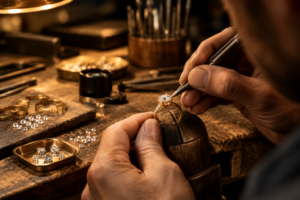
A qualified jewellery professional can inspect the piece for signs of wear, check settings and clasps, clean appropriate surfaces and assess whether any maintenance may be needed.
Professional care can be particularly useful for frequently worn diamond rings, intricate jewellery and pieces with delicate settings.
During an inspection, a jeweller may be able to identify small issues before they become more significant problems.
This is especially important for valuable jewellery because preventative maintenance can help protect both the appearance and security of the piece.
12. Keep Your Jewellery Dry and Handle It Carefully
Moisture itself isn’t necessarily harmful to every piece of jewellery, but regularly leaving jewellery damp or storing it while wet isn’t a good habit.
After exposure to water, dry your jewellery carefully with a soft cloth where appropriate before storing it.
When handling jewellery, hold it by sturdy areas rather than pulling directly on delicate components.
For example, when putting on a necklace, handle the chain and clasp carefully rather than pulling on the pendant.
Careful handling reduces unnecessary strain on small components.
13. Be Mindful of Everyday Wear
Some jewellery pieces are designed for frequent wear, while others are better suited to special occasions.
If you wear a ring every day, expect some natural signs of use over time. Minor surface marks may occur as part of normal wear.
The goal of jewellery care isn’t necessarily to prevent every tiny mark. Instead, it is to reduce avoidable damage and keep the piece in good condition.
Pay attention to your lifestyle when deciding which jewellery to wear every day.
If your day involves physical work, frequent hand washing, sports or exposure to chemicals, you may want to reserve particularly delicate jewellery for occasions when it is less likely to be damaged.
14. Follow the Care Instructions for Your Jewellery
When you purchase fine jewellery, keep any care instructions provided by the jeweller.
These recommendations may include information about cleaning, storage, professional servicing and situations where the piece should be removed.
If you purchase a new jewellery piece and are unsure about its care requirements, ask the jeweller before cleaning or treating it at home.
Understanding the materials and construction of your jewellery can help you make better decisions about everyday care.
A Simple Jewellery Care Routine
Caring for gold and diamond jewellery doesn’t have to be complicated.
A simple routine can include:
Daily
- Put jewellery on after applying cosmetics and perfume.
- Remove pieces before activities that could cause damage.
- Store jewellery safely after wearing it.
Regularly
- Gently clean suitable jewellery.
- Check clasps and visible settings.
- Look for signs of damage or loose stones.
Occasionally
- Have frequently worn or valuable jewellery professionally inspected.
- Arrange professional cleaning when appropriate.
- Address any damage before continuing to wear the piece.
These small habits can help keep your favourite jewellery looking its best.
How to Keep Your Jewellery Looking Beautiful for Years
Fine jewellery can become part of your life. A gold ring may remind you of an important milestone, while a diamond necklace may become associated with a special celebration. Over time, these pieces can carry memories that make them more valuable emotionally than when you first purchased them.
Taking care of your jewellery helps protect those memories.
Store each piece thoughtfully, clean it gently, avoid unnecessary exposure to chemicals, remove jewellery during activities that may cause damage and seek professional attention when needed.
Most importantly, remember that jewellery care is about consistency rather than complicated routines.
A few thoughtful habits can help preserve the beauty of your favourite pieces for years to come.
Jewellery Worth Caring For
Beautiful jewellery becomes even more meaningful when it stays with you through the years.
Whether it is a timeless gold ring, a sparkling diamond necklace, an elegant bracelet or a treasured pair of earrings, every piece deserves thoughtful care.
Treat your jewellery gently, store it properly and give it professional attention when needed. With the right habits, your favourite pieces can continue to accompany your celebrations, milestones and everyday moments.
At The House of Jewels, we believe fine jewellery should be made to become part of your story.
Discover timeless jewellery designed for life’s most precious moments.