Behind the Craft: How Fine Jewellery Is Made
Every piece of fine jewellery begins long before it reaches a jewellery box.
A finished ring, necklace, bracelet or pair of earrings may appear effortless and refined, but behind that finished piece is a journey that combines creativity, technical skill, carefully selected materials and meticulous attention to detail.
From the first design concept to the final polish, creating fine jewellery requires patience and precision. Every curve, setting, gemstone and surface is considered to create a piece that is not only beautiful but also comfortable and thoughtfully crafted.
At The House of Jewels, we believe understanding the process behind jewellery making makes every piece even more meaningful. When you understand the craftsmanship involved, you begin to appreciate the small details that transform precious materials into something designed to become part of your story.
Here is a closer look at how fine jewellery is created.
1. From Inspiration to Jewellery Design
Every piece of fine jewellery begins with an idea.
That idea may come from a particular shape, gemstone, architectural detail, cultural influence, natural form or simply a desire to create something beautiful and wearable.
Jewellery designers consider much more than appearance when developing a design. They think about proportions, balance, dimensions, comfort and how the finished piece will move with the person wearing it.
A design may begin as a simple concept before being refined into a more detailed jewellery design.
The designer may consider questions such as:
- How will the jewellery look when worn?
- Where will the gemstones be placed?
- How should light interact with the surface?
- How can the piece remain comfortable?
- Which metal will complement the design?
- How can the piece maintain its character without becoming impractical?
This stage is where creativity and functionality come together.
The goal is not simply to create something visually appealing. It is to develop a design that balances beauty, wearability, craftsmanship and character.
2. Developing the Design
Once the initial concept has been established, the design goes through a refinement process.
Proportions are reviewed, details are adjusted and the overall structure is considered carefully.
Depending on the type of jewellery being created, the design may be represented through detailed sketches or digital modelling before production begins.
This stage is particularly important because even small changes can influence the final appearance of a piece.
A slight adjustment to the curve of a ring, the position of a gemstone or the thickness of a band can change how the jewellery looks and feels.
The designer’s vision must also be translated into something that can realistically be crafted.
This is where creative ideas meet technical knowledge.
3. Selecting the Materials
The materials used in fine jewellery play an important role in its final appearance and character.
Gold, diamonds and other gemstones are selected according to the design and the intended personality of the piece.
Gold can be used in different colours and finishes, including yellow gold, white gold and rose gold. Each option can create a different visual effect.
Gemstones introduce another dimension to the design. Their colour, shape, size and placement can influence the overall appearance of a piece.
For diamond jewellery, the characteristics of the diamonds and the way they are arranged can affect how the finished piece interacts with light.
Material selection is therefore not simply about choosing precious components. It is about understanding how those components will work together.
The combination of metal, gemstones, design and craftsmanship gives every piece its individual personality.
4. Preparing the Metal
Once the design and materials have been established, the jewellery-making process moves into production.
Depending on the design, the metal may need to be shaped, formed or cast into the required structure.
Casting can be used to create particular jewellery forms, while other pieces may require skilled forming or fabrication techniques.
The exact process depends on the design and construction of the jewellery.
At this stage, precision is essential.
The metal needs to be shaped according to the intended dimensions so that the finished piece has the correct proportions.
For rings, necklaces and bracelets, even small variations can influence how the jewellery fits and feels.
This is one reason why fine jewellery requires experienced craftsmanship. Turning a design concept into a physical structure requires both technical understanding and careful execution.
5. Bringing the Design to Life
Once the basic structure has been created, skilled craftspeople begin refining the piece.
Depending on the jewellery design, this can involve techniques such as:
- Casting
- Forming
- Soldering
- Filing
- Shaping
- Setting
- Polishing
- Detailed finishing
Each stage contributes to the final appearance and functionality of the jewellery.
A craftsperson may carefully refine an edge, adjust a connection or prepare an area for a gemstone setting.
These steps may seem small individually, but together they determine the quality and character of the finished piece.
Fine jewellery is often the result of many precise decisions rather than one single process.
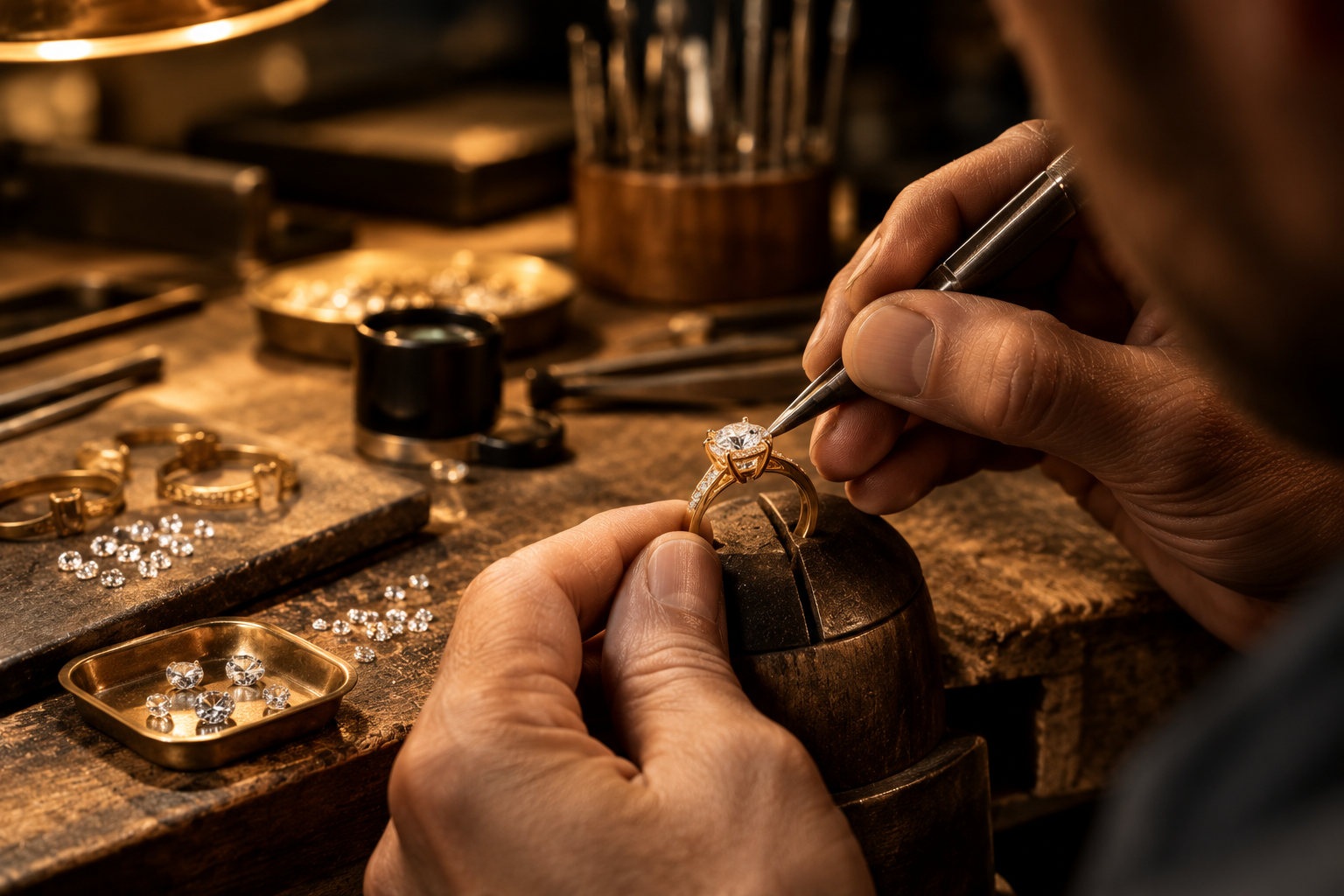
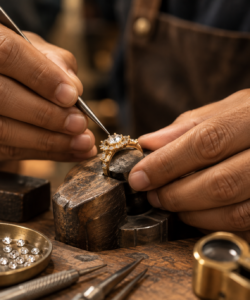
6. Setting the Gemstones
For fine jewellery featuring diamonds or coloured gemstones, setting is one of the most delicate stages of production.
The gemstone needs to be positioned carefully within its setting so that it complements the overall design.
Different setting styles can create different visual effects. The setting also needs to hold the gemstone securely while allowing the intended amount of light to interact with it.
The positioning of each stone matters.
In jewellery featuring multiple diamonds or gemstones, consistency in alignment and spacing can have a significant effect on the overall appearance.
This is why gemstone setting requires patience, precision and experience.
A beautifully designed piece can only achieve its intended appearance when the stones are carefully placed and finished.
7. Creating the Fine Details
One of the defining characteristics of fine jewellery is attention to detail.
Some of the most important craftsmanship may involve details that are barely noticeable at first glance.
The smoothness of an edge, the symmetry of a design, the consistency of a surface and the precision of a gemstone setting can all contribute to the overall experience of wearing the jewellery.
These details may not immediately stand out individually, but together they create a sense of refinement.
This is what separates a simple jewellery concept from a carefully crafted piece of fine jewellery.
The goal is to make every component work together seamlessly.
8. Soldering and Joining Components
Many jewellery designs contain multiple individual components that need to be joined together.
Depending on the design, soldering or other joining techniques may be used to connect different parts of a piece.
For example, a necklace may contain multiple elements that need to be securely connected, while a detailed ring may require several components to come together as one cohesive structure.
These connections need to be carefully executed and refined so that they are secure without compromising the appearance of the jewellery.
Precision is particularly important in fine jewellery because small imperfections can become noticeable once the piece is completed.
9. Refining the Surface
Once the primary construction is complete, the jewellery moves towards its finishing stage.
Surfaces are refined, edges are carefully finished and imperfections are addressed.
Depending on the desired appearance, the jewellery may receive a polished, brushed, textured or other specialised finish.
Polishing can help create a smooth, reflective surface and enhance the visual character of the metal.
This stage requires careful control because different areas of a jewellery piece may need different levels of finishing.
A ring, for example, may require particular attention to its outer surface while maintaining the intended details around its setting.
10. The Importance of Polishing
Polishing is one of the stages that helps bring the character of fine jewellery to life.
A carefully polished surface can enhance the appearance of gold and help create the refined finish associated with fine jewellery.
However, polishing is not simply about making a piece shiny.
The process needs to preserve the shape, proportions and design details of the jewellery.
Too much finishing can affect delicate details, while insufficient refinement may leave the surface looking unfinished.
Skilled craftsmanship is therefore important at this stage.
The final result should reflect the original design while presenting a clean and carefully finished appearance.
11. Quality and Final Inspection
Before fine jewellery reaches its wearer, it should undergo careful inspection.
The finished piece is examined to ensure that the construction, finish and details meet the intended standards.
For jewellery containing gemstones, attention may also be given to the security and alignment of the settings.
Clasps, connections and other functional elements can also be checked.
This final inspection is an important part of the jewellery-making process because it provides an opportunity to identify and address issues before the piece is completed.
Quality is not only about how jewellery looks.
It is also about how carefully it has been constructed and how comfortably and securely it can be worn.
12. Craftsmanship Meets Technology
Modern fine jewellery making can combine traditional craftsmanship with contemporary technology.
Digital design tools and modelling techniques can help designers visualise a piece before production. Technology can also support accuracy when developing complex shapes and structures.
However, technology does not replace the importance of skilled craftsmanship.
The final jewellery piece may still require experienced hands for setting, finishing, polishing and inspection.
The combination of modern techniques and traditional skills allows jewellery makers to create designs that are both precise and expressive.
This balance between innovation and craftsmanship is part of what makes contemporary fine jewellery so interesting.
13. Why Craftsmanship Matters
When you purchase fine jewellery, you’re not simply purchasing gold, diamonds or gemstones.
You’re choosing a combination of design, materials, skill and time.
Two pieces may use similar materials but feel completely different because of their design and craftsmanship.
Details such as proportion, finishing, gemstone placement and construction can influence how a piece looks and feels.
This is why craftsmanship is such an important part of fine jewellery.
A beautifully crafted piece can become something you reach for repeatedly—not simply because it is valuable, but because it feels special to wear.
14. From Jewellery Workshop to Jewellery Box
After the design, production, gemstone setting, finishing and inspection are complete, the jewellery is ready for its journey to its new owner.
At this point, what began as an idea has become a physical piece of jewellery.
A ring may eventually become part of a proposal or anniversary celebration.
A necklace may become a treasured gift.
A pair of earrings may accompany someone through weddings, celebrations and important milestones.
The journey from concept to jewellery box is what gives fine jewellery much of its emotional appeal.
It is not simply a finished object. It is a piece that may eventually become connected to someone’s memories.
What Makes Fine Jewellery Special?
Fine jewellery is special because of the combination of elements that go into creating it.
It begins with an idea.
That idea becomes a design.
Precious materials are carefully selected.
Skilled craftspeople transform those materials into a physical piece.
Gemstones are positioned with precision.
Surfaces are refined and polished.
The finished jewellery is inspected before it reaches its wearer.
Every stage contributes to the final result.
When you wear a piece of fine jewellery, you are therefore wearing the result of a creative and carefully considered process.
Jewellery Designed to Last Beyond Trends
Trends can influence jewellery design, but fine jewellery often has a life beyond a single season.
Timeless proportions, quality materials and thoughtful craftsmanship can allow a piece to remain meaningful as personal styles change.
This is why choosing jewellery based on more than current fashion can be worthwhile.
Consider whether the design speaks to your personality and whether you can imagine wearing it years from now.
The most treasured jewellery pieces are often those that continue to feel relevant long after they were first purchased.
Crafted to Become Part of Your Story
A piece of jewellery can begin as a simple idea, pass through multiple stages of design and craftsmanship and eventually become part of someone’s most important memories.
That journey is what makes fine jewellery so special.
Behind every finished ring, necklace, bracelet or pair of earrings is a combination of creativity, technical skill, carefully selected materials and attention to detail.
The next time you look at a beautifully crafted piece, take a moment to appreciate everything that went into creating it.
The small details, the careful setting, the refined finish and the thoughtful design all contribute to the final experience.
At The House of Jewels, we celebrate the craftsmanship, creativity and attention to detail behind every beautiful piece.
Designed with intention. Crafted with care. Made to be treasured.